

Page 1 of 335
DK Test
Santa Anita Crusaders Scrapbook Covers
Front cover of the scrapbook. Cover is brown with an embossed design on the front cover accented in gold. Two holes on the left side show where the original binding once held the covers and inside pages together.
August 27, 2023
AASC DAMS ID: janm_94.144.1_frontcover_r_aDK Test
Santa Anita Crusaders Scrapbook Inside Cover
Inside cover of the Santa Anita Crusaders Scrapbook.
AASC DAMS ID: janm_94.144.1_frontcover_v_aDK Test
Santa Anita Crusaders Scrapbook Letter to Rick
Letter addressed to Rick regarding the Crusaders history.
AASC DAMS ID: janm_94.144.1_1r_r_aDK Test
Santa Anita Crusaders Scrapbook Letter Addressed to Rinko
1r: Letter from Mary Nakahara to Rinko. Mary suggests that Rinko has asked her to write the history of the Crusaders. Mary said that while she would like to, there are too many things to think about at the moment and it’s difficult for her to find a free typewriter. She suggests that the “foreward”…
AASC DAMS ID: janm_94.144.1_1r_v_aDK Test
Santa Anita Crusaders Scrapbook Letter from Crusaders
Letter from the Crusaders regarding sending a Valentine’s wish to the Japanese American soldiers.
AASC DAMS ID: janm_94.144.1_1v_aDK Test
Santa Anita Crusaders Scapbook Regarding Purpose of Organization
2r: “Santa Anita Crusaders” includes background on the social/service club’s origins and purpose, ending with the motto: “Carry on.” An envelope containing a letter from Matt Gallagher, San Pedro USO, Aug 1942 is pasted on recto. (letter is 94.144.1_2r_a); 2v: (3) Easter greeting cards. Accompanying caption in scrapbook reads: The Crusader group at Jerome was…
AASC DAMS ID: janm_94.144.1_2r_aDK Test
Letter Addressed to the Crusaders Sunday School Class, August 6, 1942
Letter of thanks for interests in the San Pedro USO Center.
AASC DAMS ID: janm_94.144.1_2r_a_aDK Test
Santa Anita Crusaders Scrapbook of Letters and Messages
Santa Anita Crusaders scrapbook regarding various letters and messages pasted on the page. Caption reads: “The Crusaders group at Jerome was the most active of all the centers. They sent candy and gum to the Children’s Village at Manazar and to the Hillcrest Santarium, kept in contact with the resettlers, soldiers (both on the mainland…
AASC DAMS ID: janm_94.144.1_2v_aDK Test
Santa Anita Crusaders Scapbook of Holiday Cards and Letter to Martha Ono
3r: Copy of Thanksgiving greetings from Crusaders that was sent out. Also includes card from Jane Horino (94.144.1_3r_b) and 2-page letter from Martha Ono (94.144.1_3r_a_1-2) mentioning camp food and how she craves a steak, July 1943. 3v: Christmas greeting v-mail that the Crusaders sent out to Nisei soldiers (n.d.)
AASC DAMS ID: janm_94.144.1_3r_aDK Test
Santa Anita Crusaders Scrapbook with Letter from Martho Ono
Letter written on July 19, 1943 in Topaz, Utah.
AASC DAMS ID: janm_94.144.1_3r_a_1_aDK Test
Santa Anita Crusaders Scrapbook with Letter from Marhta Ono, Page 2
Letter written on July 19, 1943 in Topaz, Utah.
AASC DAMS ID: janm_94.144.1_3r_a_2_aDK Test
Santa Anita Crusaders Scrapbook with Card, June 3, 1943
Thank you card addressed to the Crusaders from Jane Harino.
AASC DAMS ID: janm_94.144.1_3r_b_aPage 1 of 335

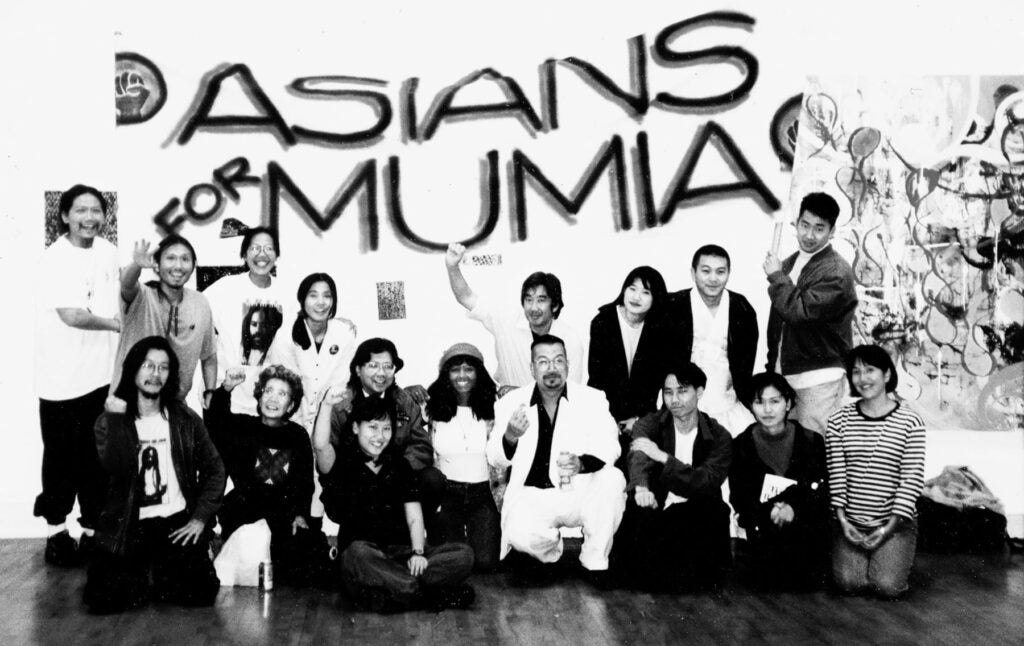
Yuri continued her grassroots activism throughout her life. In the 1990s, she formed prisoner support groups for Asian American prisoners and drew Asian Americans into the struggle for political prisoners.
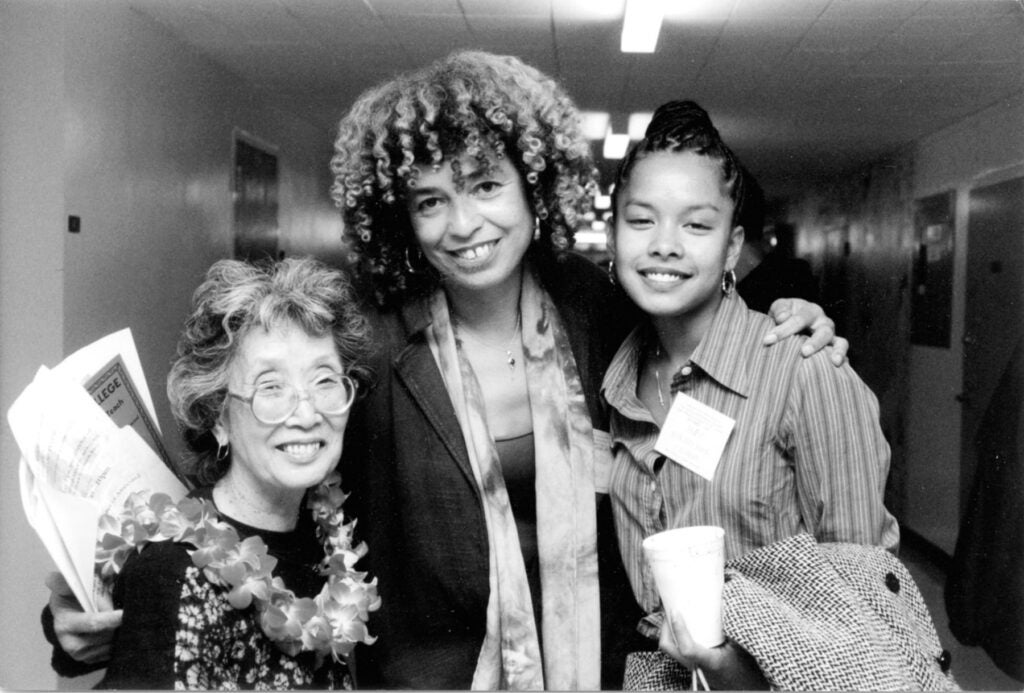
In the 1990s, Yuri Kochiyama grew to national prominence as one of the most influential Asian American activists of the 20th century. Asian American college students across the nation began inviting her to be their featured speaker.
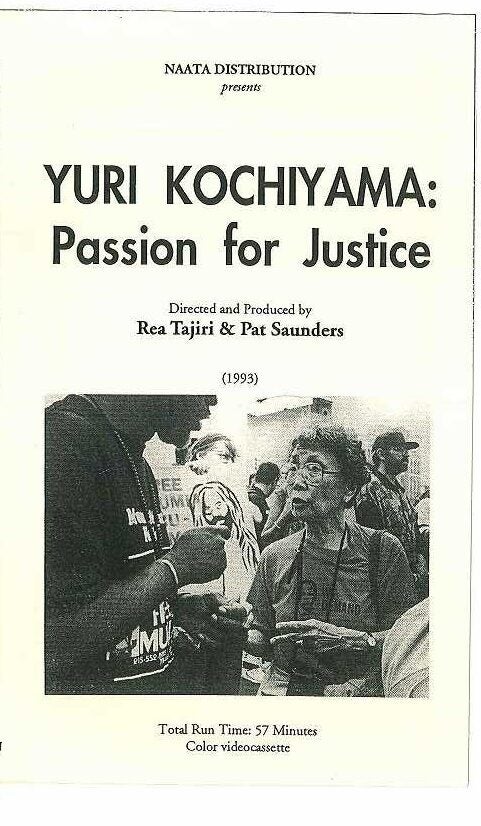
Caption: Rea Tajiri and Pat Saunders’s documentary, “Yuri Kochiyama: Passion for Justice” (1993)
Two documentaries center Yuri’s activism
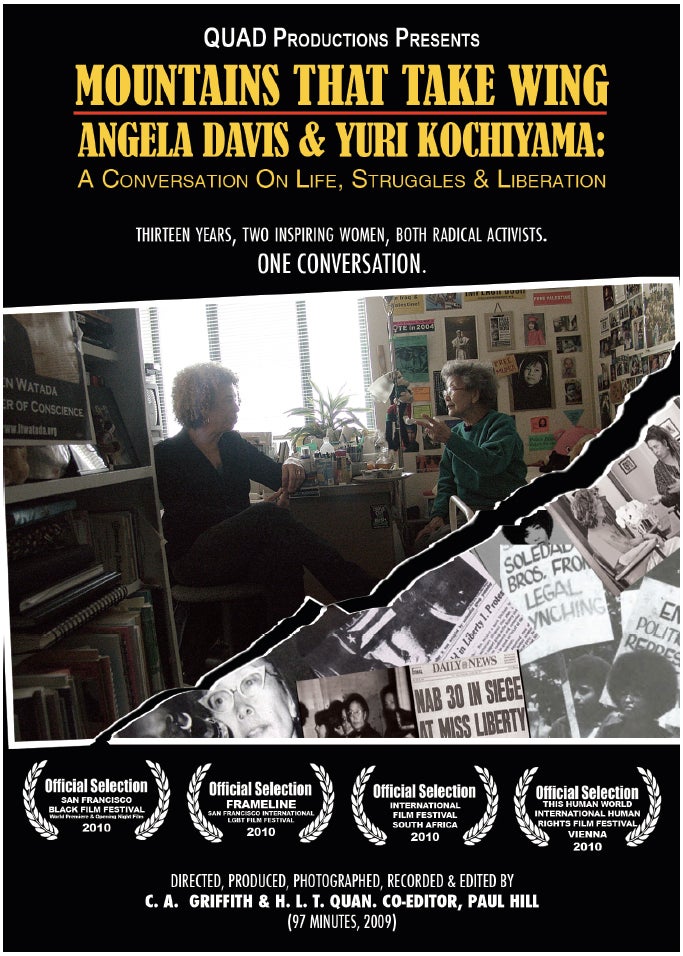
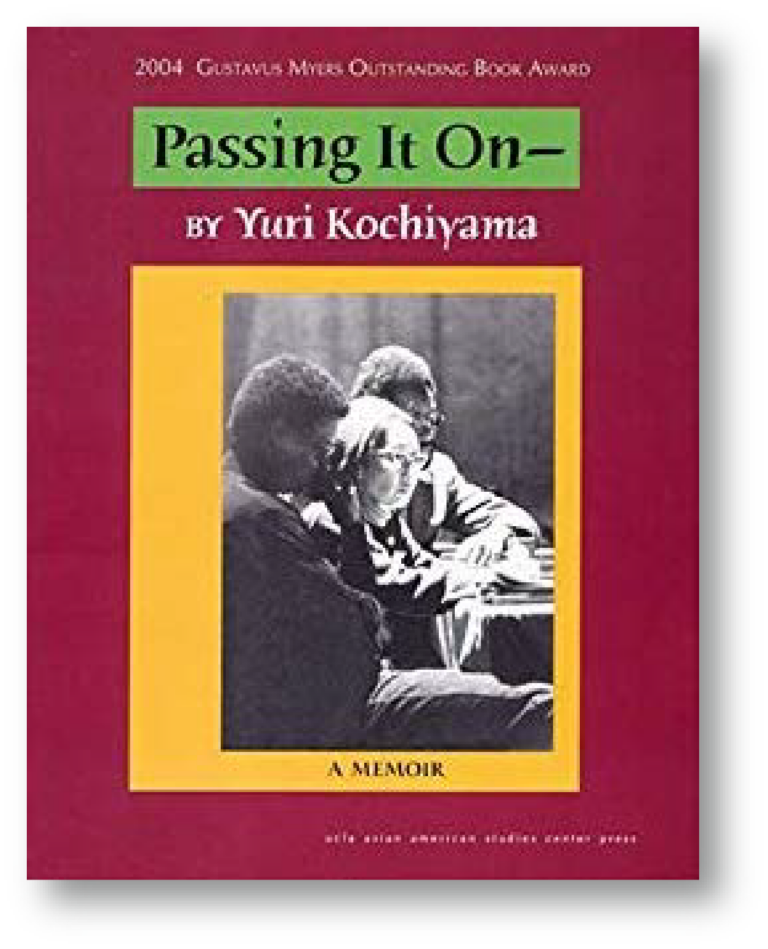
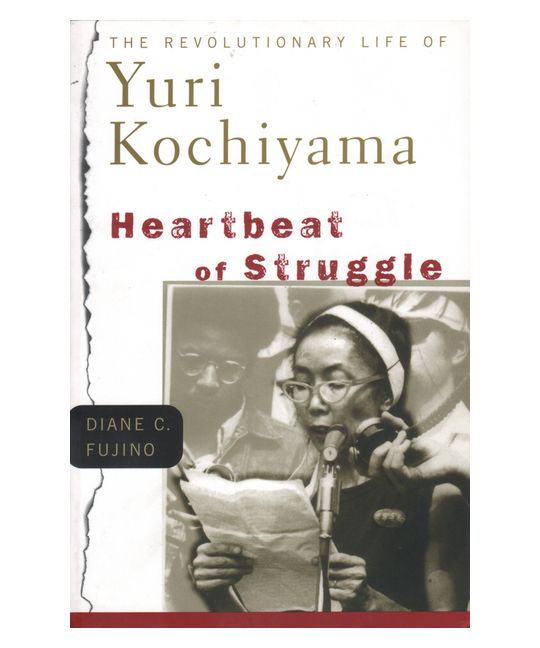
Two books focus on Yuri’s activism and life

Yuri’s impact on political activism and popular culture is tremendous, including:
* The Blues Scholars’s song, “Yuri Kochiyama”
* The corporate giant, Google, recognized Kochiyama with a google doodle in 2016.
* The Asian American Women Artists Association curated an art exhibition, “Shifting Movements: Art Inspired by the Life & Activism of Yuri Kochiyama,” San Francisco, 2016.
* The Asian Law Caucus established the annual Yuri Kochiyama Impact Award.
References
Diane C. Fujino, Heartbeat of Struggle: The Revolutionary Life of Yuri Kochiyama. Minneapolis, MN: University of Minnesota Press, 2005
Diane C. Fujino, “Grassroots Leadership and Afro-Asian Solidarities: Yuri Kochiyama’s Humanizing Radicalism.” In Want to Start a Revolution?: Radical Women in the Black Freedom Struggle., ed. Dayo F. Gore, Jeanne Theoharis, and Komozi Woodard, 294-316. New York: New York University Press, 2009.
C.A. Griffith and H.L.T. Quan. Mountains that Take Wing: Angela Davis and Yuri Kochiyama. Documentary, 2009.
Yuri Kochiyama, Passing It On–A Memoir. Edited by Marjorie Lee, Akemi Kochiyama-Sardinha, and Audee Kochiyama-Holman. Los Angeles: UCLA Asian American Studies Center, 2004.
Yuri Kochiyama, speeches, UCLA Asian American Studies Center.
NPR, Throughline podcast, “Our Own People”.
Rea Tajira and Pat Saunders. Yuri Kochiyama: Passion for Justice. Documentary, 1993.
Hansi Lo Wang (August 19, 2013). “Not Just A ‘Black Thing’: An Asian-American’s Bond With Malcolm X”. NPR, Code Switch podcast.
Mary Yuri Nakahara was born on May 19, 1921, in San Pedro, CA, the child of immigrants from Japan. Her father, Seiichi Nakahara, was a fishmerchant entrepreneur with social connections to the Japanese elite, and her mother, Tsuyako “Tsuma” (Sawaguchi) Nakahara, was a college-educated homemaker and occasional piano teacher.
The Nakahara family at their San Pedro home, circa 1924. Tsuya (left) and Seiichi (right) with children Yuri, Pete and Arthur. Photo Credits

The Nakahara family at their San Pedro home, circa 1924. Tsuya (left) and Seiichi (right) with children Yuri, Pete and Arthur.
She grew up with her older brother, Art, and her twin brother, Pete. They were part of the “Nisei” generation, or children of Japanese immigrants.
Despite their middle-class comforts, her family experienced residential segregation and other forms of racism. Anti-Japanese racism was widespread even before World War II.
The Nakahara family in their San Pedro home, 1938. (From left) Arthur, Seiichi, Peter (standing), Yuri, and Tsuya. Photo Credits
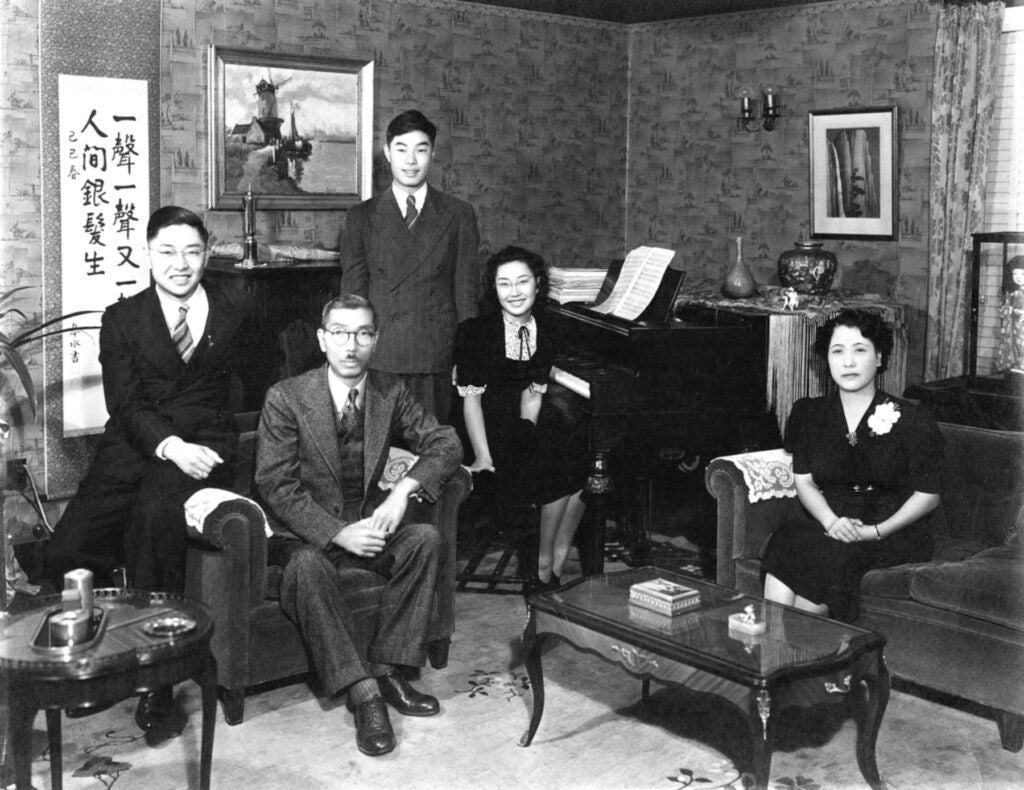
The Nakahara family in their San Pedro home, 1938.
(From left) Arthur, Seiichi, Peter (standing), Yuri, and Tsuya.
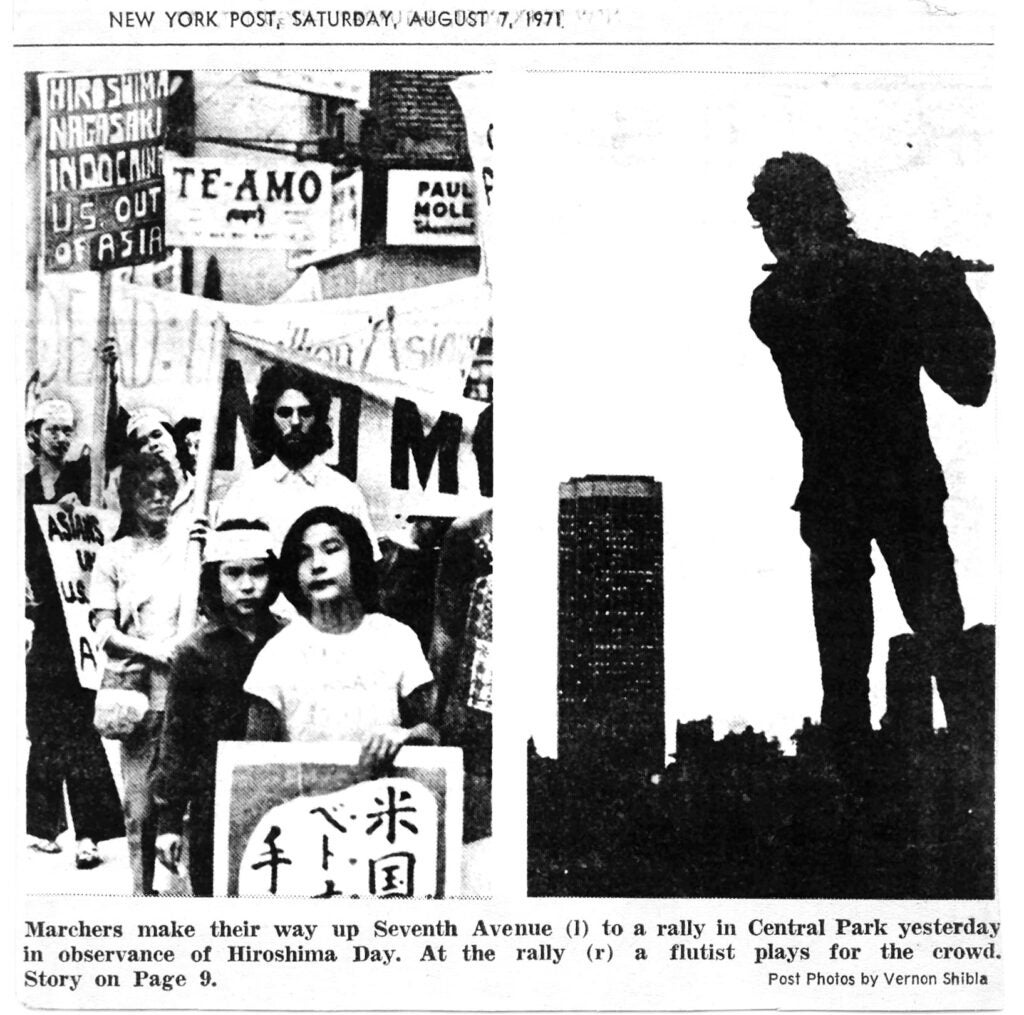
Tommy (with headband) and Jimmy in a demonstration to commemorate the bombings of Hiroshima and Nagasaki at Central Park, August 6, 1971. Photo Credits
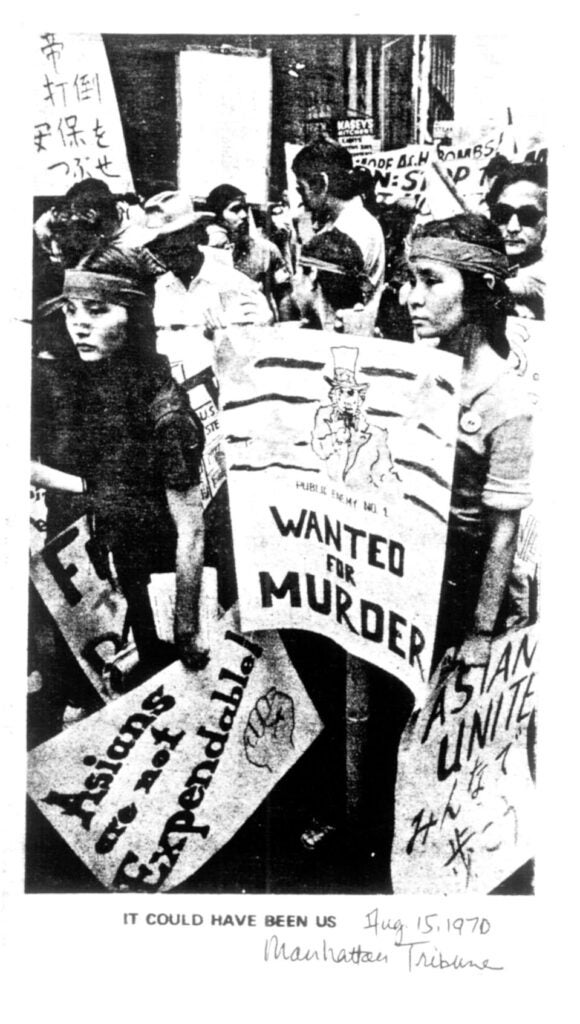
Tommy (with headband) and Jimmy in a demonstration to commemorate the bombings of Hiroshima and Nagasaki at Central Park, August 6, 1971. Photo Credits
When the Asian American Movement started in the late 1960s, young activists admired Yuri for her dedication to the Movement and for her connections with Black radicalism. Asian American activists from the West Coast would travel to New York to visit with Yuri and other Japanese American activists with long histories of struggle. Yuri became a foremost bridge between East Coast and West Coast Asian American activists and between the Black and Asian movements.
Not only Yuri, but her husband and children as well, were active in various struggles for justice.
Yuri’s father had recently had ulcer surgery when the FBI agents took him away.
His health greatly deteriorated during his six weeks in detention. The government released him only when he was near death. Mr. Nakahara died the next day, on January 21, 1942, at his family home. He was 54 years old.
Seiichi Nakahara and Tsuya Sawaguchi’s wedding picture, 1917. Photo Credits
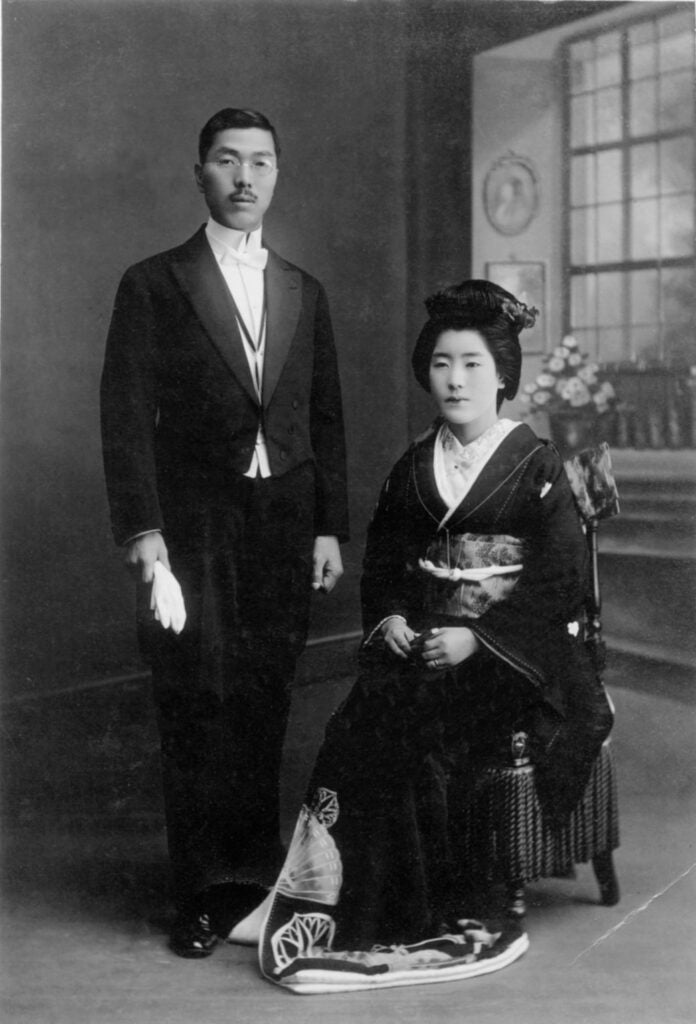
Seiichi Nakahara and Tsuya Sawaguchi’s wedding picture, 1917. Photo Credits